
She Left Skating for 33 Years. Then She Became a Seven-Time National Champion.
Merry Neitlich is one of seven women in the country who compete in U.S. Figure Skating’s silver level nationally in the 66-and-over category.
Photo credit The Vine
On a weekday afternoon at Great Park Ice in Irvine, 74 year old Merry Neitlich calmly steps onto the ice in Rink 3 to run through her solo free dance routine. She is preparing for a regional competition, but she is also chasing “the joy, the sheer joy” of the sport she rediscovered at 49.
“I skated as a child from ages 5 to 12,” Neitlich said after her practice session at the Between the Rinks Cafe, surrounded by fellow figure skaters ranging from novices to Olympians recently returned from the Winter Games in Milan.
Her early start in skating ended abruptly. “I had a very dysfunctional home life,” she said, and the people around her could not support her skating. The loss lingered. “I never got to reach my potential,” she said. “I couldn’t even watch skating for years.”
Skating returned to her life through motherhood. When her daughter began skating competitively, Neitlich found herself back at the rink, this time as an adult. Her daughter’s coach made her an offer that changed everything. “One day he said to me, ‘Oh, Merry, just get some new boots, and I’ll give you a free lesson.’”
That first lesson turned into a second life in skating.
“I was 49 when I went back,” Neitlich said. “I hadn’t skated in like 33 years.” Like many adults who lace up again, she assumed she’d simply enjoy the exercise and the challenge.
“In the first year that I went to nationals, I won, which just flipped me out because I had no expectations at all,” she said. That was 2001. From there, she kept going. “I’ve won seven times,” she said, adding that she’s had many more podium finishes over the years.
Neitlich competes in U.S. Figure Skating’s adult structure, where events are divided by both age and skill level. She currently competes at the silver level in the 66-and-over category, a bracket that has become smaller over time. “There are now seven women nationally who compete at my skill level, my age group… 66 and older,” she said. Adult skaters share a dark humor. “U.S. Figure Skating calls it 66 and over,” she said. “We call it 66 to death.”
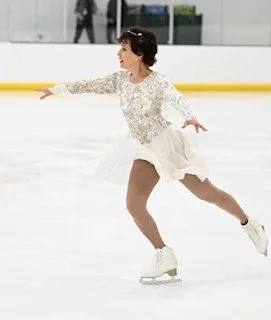
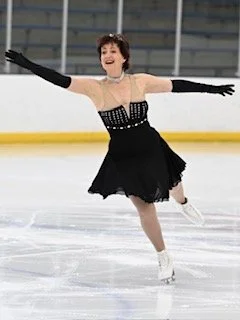
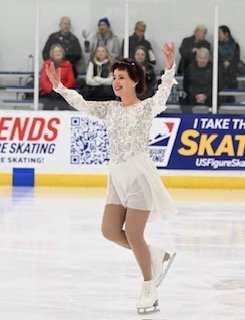
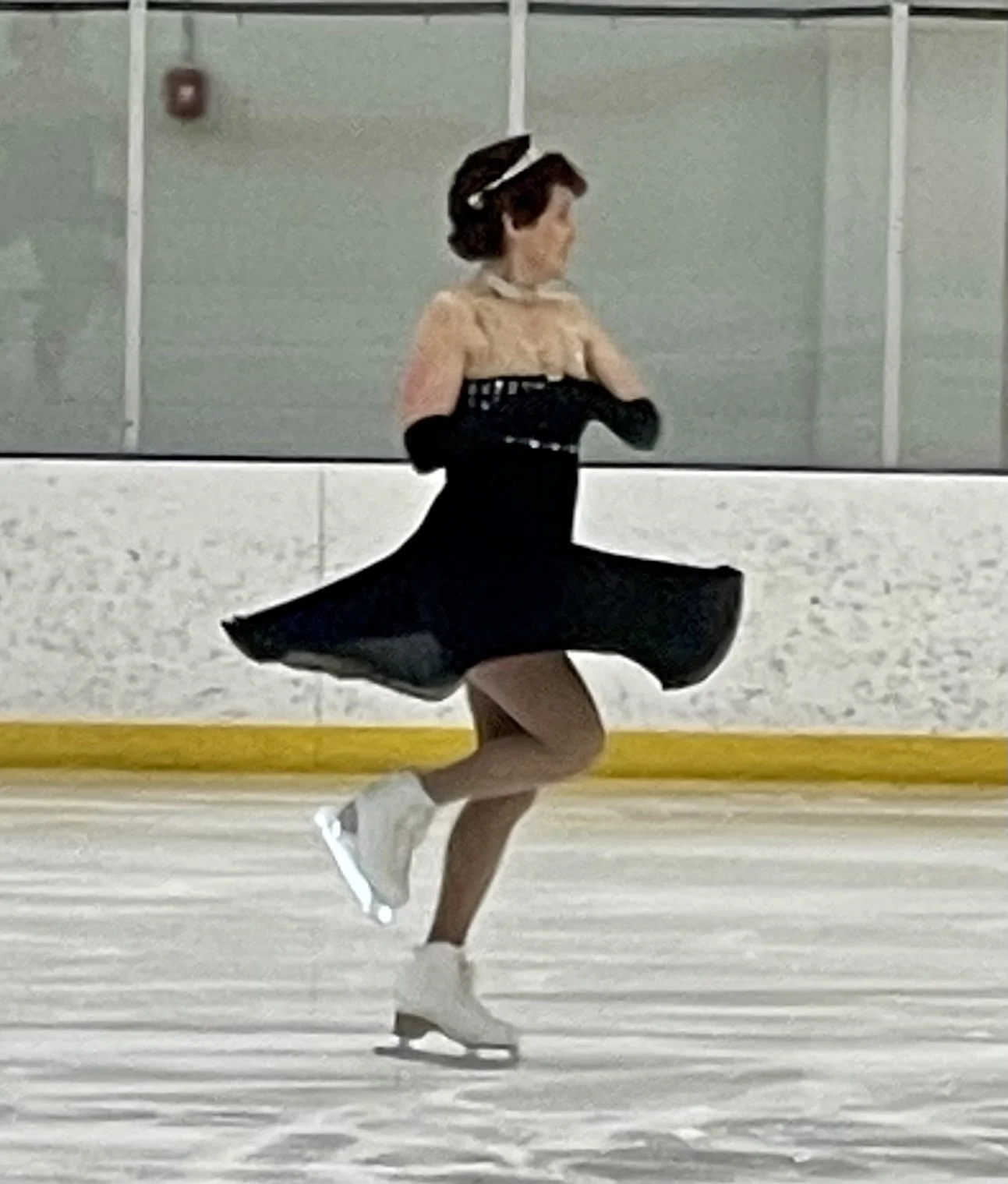
Seven-time national champion Merry Neitlich has competed in adult figure skating for 25 years.
Photo credit Merry Neitlich
The numbers may be smaller now, but the community still spans decades, cities and friendships built in the in-between time of practices and competitions. “I have friends that I see at sectionals and nationals. I see them two weeks a year,” she said. “But we talk on the phone, we Zoom… and we’re really good friends.”
At Great Park Ice, Neitlich trains with Jaqueline Palmore in a continual effort to improve her technique. “I want to get better, as best as I can, because I know I’m losing elements.” Neithlich said Palmore is relentless in the best way, even during warmups: “Turn your foot out. Point your toe. Bend your knee… cross harder,” she said. “She’s demanding, and I love it.”
“Working with Merry is very rewarding in so many ways for me,” said Palmore. “Her daily desire to learn, along with performing in competitions to her utmost perfection during each event, is truly inspiring. I love to watch the joy in her expressions when she applies corrections given to her.”
Neitlich also works with choreographer Phillip Mills, whom she describes with unmistakable affection. “He’s been my choreographer 17 years,” she said. “He knows my skating. He’s been through everything with me, losing some elements over time… recovering from open heart surgery and knee surgery.” Then she laughed and summarized the relationship in her own blunt shorthand: “He’s the bomb.”
Skating, she said, is never finished. “You’re never done learning,” she said. “No matter how good you are.” Even a small correction can feel monumental. When a spin finally locks into place, “it’s like a million-dollar paycheck,” she said. “It’s so much fun.”
Her longevity as a skater is not accidental. “You have to commit,” she said. “If you really want to be successful… you can’t just take lessons. You have to practice.” Neitlich says she runs all her programs on the days she skates, building both stamina and confidence through repetition. She also credits the mindset work that came from her sessions with sports psychologist Dave Diggle after her knee surgery. “Confidence is an emotion,” she said, a phrase that stuck with her. “I have a process… it’s inside me now.”
She trains through arthritis in both knees and relies on regular treatments to keep skating possible. She has also skated her way back from serious illness. After open heart surgery, she returned to the ice at three months, shaky and exhausted. “I literally was holding Phillip’s hand,” she said. “I could skate, like, 10 minutes.” Eight months later, she was competing again.
Despite the titles and medals, Neitlich says she isn’t skating for medals anymore. “I’ve done it enough,” she said of competitions. “I don’t have anything else to prove.”
What she does want to prove is something simpler, and it is a message she repeats without hesitation: “You’re never too old to start.”
For adults who are curious but afraid, she’s practical. Wear protective gear if you need it. Find a coach who respects adult skaters. Get properly fitted for boots (she said the pro shop at Great Park Ice is one of the finest in the nation for skates). Then, she said, just go do it. “You should just have fun,” she said. “Enjoy the small progress that people make. It’s remarkable.”
In the end, if that progress takes one to competing on the national stage, Neitlich’s philosophy is simple. “The goal is to skate the best you can skate for that day,” Neitlich said. “And then, however the judges rank you, they rank you. No control.”
For Neitlich, that lack of control is part of the magic. The ice is the one place where effort can be immediate, joy can be physical, and it is never too late to begin again.
Neitlich will compete in the Pacific Coast Adult Figure Skating Sectional Championships in Spokane, Washington. Follow the competition from March 6-8 online.